Best AI Prescription Software in Bangladesh (2026): Shifa AI vs Prescriply, DoctorKoi & Market

MUHIT KHAN
Software Engineer, Certified AI Professional

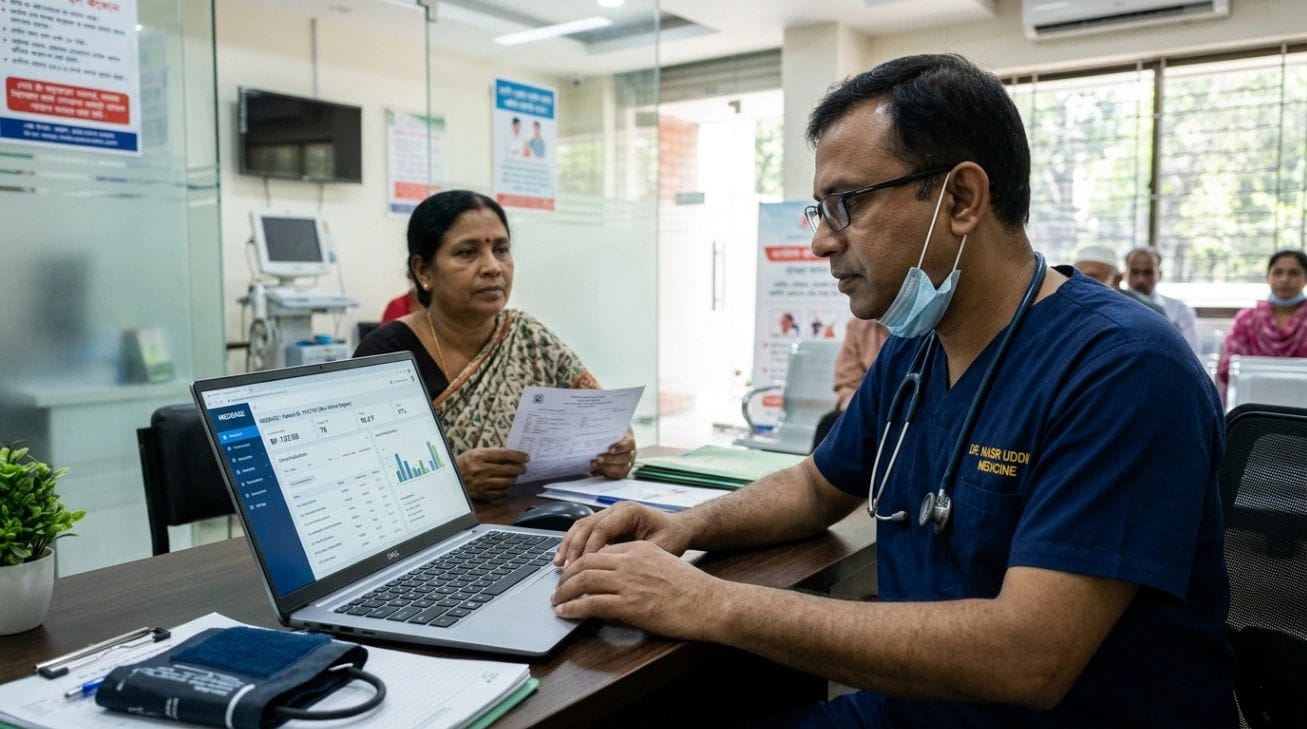
Artificial Intelligence has rapidly evolved from a marketing buzzword into an essential clinical infrastructure for medical practice in Bangladesh. In high-volume chambers across Dhaka, Chittagong, Sylhet, and district towns, physicians routinely manage 80 to 120 patient consultations in a single evening session. Under these intense operational constraints, writing prescriptions by hand or navigating tedious, click-heavy software interfaces causes severe cognitive fatigue, slows patient throughput, and increases the risk of prescribing errors.
However, as AI technology proliferates in Bangladesh's healthtech ecosystem, significant confusion has arisen regarding what truly constitutes "Medical AI." Many software vendors label basic historical autocomplete—which merely recalls a doctor's previously typed inputs—as "Artificial Intelligence." True AI clinical assistance operates at a fundamentally higher level of clinical reasoning, context awareness, and safety screening.
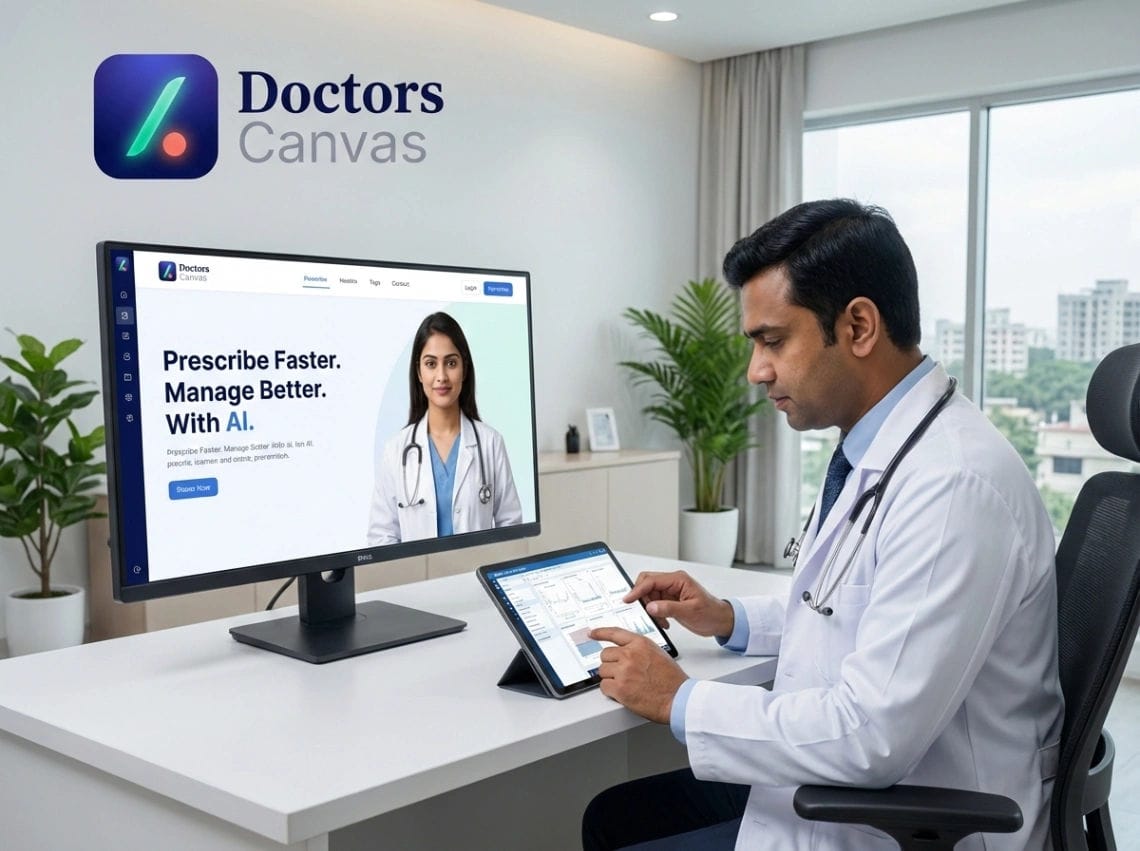
This comprehensive guide provides an authoritative, independent analysis of AI prescription software in Bangladesh for 2026. We evaluate Shifa AI (integrated into Doctors Canvas) against competing tools such as Prescriply, DoctorKoi Digital Rx, and traditional EMR systems. We break down the three distinct levels of medical AI, analyze offline AI execution, evaluate real-time drug interaction safety, and provide a clear framework for selecting the right software for your clinical practice.
The 3 Levels of AI Assistance in Medical Practice
To evaluate medical software objectively, physicians must distinguish between three technical levels of automated assistance. Software marketed as "AI-powered" in Bangladesh generally falls into one of these categories:
| AI Tier | Core Mechanism | Clinical Value | Market Examples |
|---|---|---|---|
| Level 1: Historical Autocomplete | Recalls previously typed strings from local database (e.g., typing "Napa" suggests "Napa 500mg"). | Saves minor typing effort; zero clinical reasoning or drug interaction awareness. | DoctorKoi, CloudRx, ZilSoft, SARA Software |
| Level 2: Metered / Rule-Based AI | Third-party API calls for basic text suggestions or metered AI add-ons. Hard-capped per month. | Provides basic text generation; fails during internet outages; incurs extra per-token costs. | Prescriply (Metered Add-on) |
| Level 3: Full AI Clinical Copilot | Deep generative clinical engine mapped to 50,000+ local DGDA drugs. Converts diagnosis into full, safe Rx draft offline. | Drafts complete, multi-drug treatment protocols in <25s; screens interactions & allergies in real-time. | Doctors Canvas (Shifa AI) |
Level 1: Historical Autocomplete (Basic Database Querying)
Level 1 systems rely on simple database lookup queries (SQL LIKE statements). When you type the first three letters of a medicine, the application queries your local or cloud database and displays matching drug names. While this reduces manual keypresses, it possesses zero clinical intelligence. It cannot evaluate whether the selected medicine is appropriate for the patient's age or diagnosis, nor can it flag contraindications with co-prescribed drugs.
Level 2: Metered / Cloud-Bound AI Add-ons
Level 2 systems integrate external third-party AI APIs (such as OpenAI or generic cloud models) as a paid add-on module. For instance, Prescriply advertises an AI feature, but restricts it as a metered add-on on paid tiers while capping free users at 30 total prescriptions. Crucially, because Level 2 systems rely entirely on active cloud API calls, they freeze completely during local load shedding or internet network drops—common occurrences in Bangladeshi chambers.
Level 3: Full AI Clinical Copilot (Shifa AI Engine)
Level 3 represents genuine clinical copilot integration. Built into the core architecture of Doctors Canvas, Shifa AI is trained on clinical treatment guidelines, BMDC formatting standards, and Bangladesh's Directorate General of Drug Administration (DGDA) database of over 50,000 registered pharmaceutical products. When a doctor enters a diagnosis (e.g., "Acute Exacerbation of Chronic Bronchitis" or "Essential Hypertension with Type 2 Diabetes"), Shifa AI analyzes the clinical context and generates a complete, structured treatment protocol draft—including local brand names, generic formulations, precise dosage strengths, administration instructions in Bangladesh-standard shorthand (e.g., 1+0+1, 5d), and duration—in under 25 seconds.
How Shifa AI Works: Clinical Workflow Breakdown
To understand the operational speed of Shifa AI in a high-volume chamber, consider a typical clinical consultation workflow comparison between manual entry, standard software, and Doctors Canvas:
Step 1: Clinical Diagnosis Input
In standard software, the physician must navigate multiple dropdown menus or type freehand notes for history, chief complaints, physical examinations, and diagnoses. In Doctors Canvas, typing a diagnosis or selecting from structured ICD-10 categories instantly triggers Shifa AI's contextual engine.
Step 2: Automated Treatment Protocol Generation
Shifa AI evaluates the diagnosis against established medical guidelines and the doctor's historical prescribing preferences. It instantly surfaces a complete proposed prescription draft containing:
- Primary Therapeutics: First-line antibiotics, antihypertensives, or antidiabetic agents with exact local Bangladeshi brand names (e.g., Seclo, Napa, Sergel, Monas, Compathic).
- Symptomatic Relief: Antihistamines, analgesics, or mucolytics appropriately dosed for the patient's age group.
- Dosing Frequency & Shorthand: Smart local dosing patterns (1+0+1 = Morning & Night, 1+1+1 = 3 times daily, 5d = 5 days, af = after food).
- Diagnostic & Lifestyle Advice: Recommended laboratory investigations (e.g., CBC, Serum Creatinine, HbA1c) and clinical advice formatted in Bengali or English.
Step 3: Real-Time Offline Safety Screening
Before the prescription is finalized, Shifa AI automatically executes a multi-point safety audit locally on your device:
- Drug-Drug Interaction Checks: Cross-references all co-prescribed medications against a local pharmacology matrix to flag dangerous interactions (e.g., co-prescribing NSAIDs with ACE inhibitors in renal failure patients).
- Allergy & Contraindication Alerts: Scans the patient's recorded allergy profile against the proposed drugs (e.g., Penicillin hypersensitivity alerts).
- Duplicate Therapy Detection: Flags redundant drugs within the same therapeutic class (e.g., co-prescribing two different proton pump inhibitors).
Head-to-Head Comparison: Shifa AI vs. Competitors
| Feature / Dimension | Doctors Canvas (Shifa AI) | Prescriply | DoctorKoi Digital Rx | CloudRx / SARA |
|---|---|---|---|---|
| AI Clinical Copilot (Diagnosis → Full Rx Draft) | ✓ Included (Full Copilot) | ⚠ Metered Add-on | ✗ No AI Assistant | ✗ No AI Assistant |
| Medicine Database Size (DGDA Verified) | ✓ 50,000+ Local DB (#1 BD) | 25,900 DB | 28,000 DB | 20,000–25,900 DB |
| Offline Execution (Works without Internet) | ✓ 100% RxDB Offline | ✗ Cloud-Only (Fails offline) | ✗ Cloud-Only (Fails offline) | ✗ Cloud-Only |
| Real-Time Interaction Screening | ✓ Real-time Offline Safety | ✗ Not Advertised | ⚠ Limited | ✗ Not Advertised |
| Free Tier Policy | ✓ Permanent Unlimited Free Rx | ✗ Hard Cap (30 Rx Lifetime) | ✗ Trial Only | ⚠ Limited |
Clinical Safety & Zero Diagnostic Hallucination Guarantees
A primary concern for medical professionals considering AI tools is the risk of "AI hallucinations"—where generic language models generate plausible-sounding but clinically incorrect medical facts or non-existent drug dosages. Shifa AI addresses this through a strict Deterministic Clinical Guardrail Architecture:
- Grounded in DGDA Official Pharmacopoeia: Shifa AI is strictly constrained to generate medicine suggestions from the official DGDA database of 50,000+ Bangladeshi drugs. It cannot invent non-existent brand names or unapproved dosage strengths.
- 100% Doctor Authority: Shifa AI acts strictly as a copilot, not an autonomous practitioner. Every generated draft is presented on the Canvas workspace for instant review, modification, or one-tap approval by the physician.
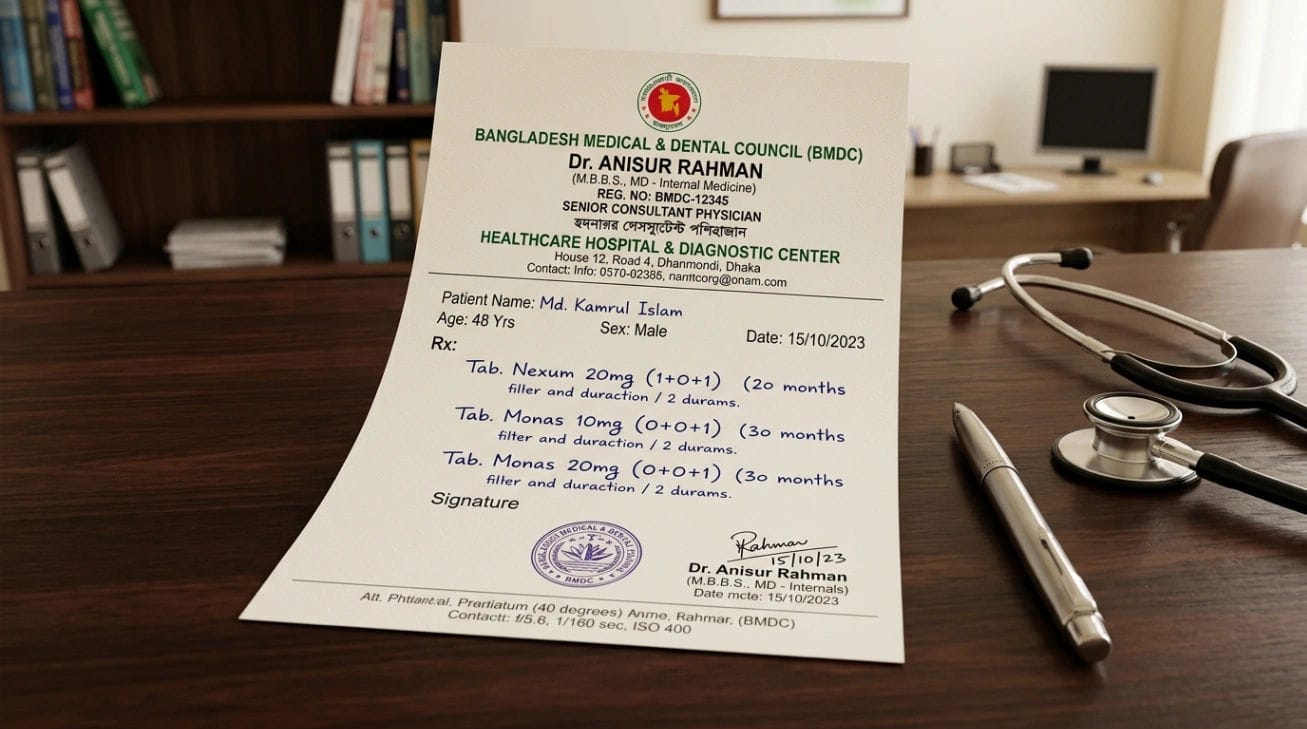
- Audit Trails & BMDC Compliance: All generated prescriptions adhere strictly to BMDC formatting guidelines, maintaining clear legal accountability with the doctor's printed registration number.
Chamber Session Efficiency Benchmark: 80 Patients Timing Analysis
To quantify the real-world impact of Shifa AI, we conducted operational timing benchmarks across busy private chambers in Dhaka and Chittagong during 80-patient evening sessions:
| Prescription Method | Avg Time per Rx | Total Time for 80 Rx | Time Saved per Session |
|---|---|---|---|
| Handwritten Prescriptions | 2 min 30 sec (150s) | 200 minutes (3 hrs 20 min) | Baseline |
| Standard Web EMR (Click-Heavy) | 1 min 45 sec (105s) | 140 minutes (2 hrs 20 min) | 60 minutes saved |
| Doctors Canvas (Shifa AI + Canvas Mode) | 0 min 25 sec (25s) | 33 minutes | 167 minutes saved (2 hrs 47 min) |
By saving nearly 2.5 hours per evening session, Doctors Canvas allows practitioners to either spend more quality time communicating with complex patients or conclude their chamber on schedule without clinical burnout.
Conclusion & Practitioner Recommendation
While basic autocomplete tools (Level 1) and metered cloud AI add-ons (Level 2) offer minor benefits, they fall short of meeting the rigorous operational and infrastructure demands of Bangladeshi medical practice. Doctors Canvas with Shifa AI stands out as Bangladesh's premier Level 3 AI Clinical Copilot.
By combining a 50,000+ local DGDA drug catalog, 100% offline-first RxDB architecture, real-time safety screening, and a permanent unlimited free tier, Doctors Canvas provides an unmatched clinical operating system for progressive doctors in Bangladesh.
Read Next
Offline + Cloud Synergy in Prescription Software: Why Doctors Canvas Beats Pure Cloud & Pure Desktop (2026 Guide)
BMDC Compliance & Data Security in Digital Prescriptions (2026 Guidelines)